Search
Liturgy
-
Chant Ordinaries Playlist
-
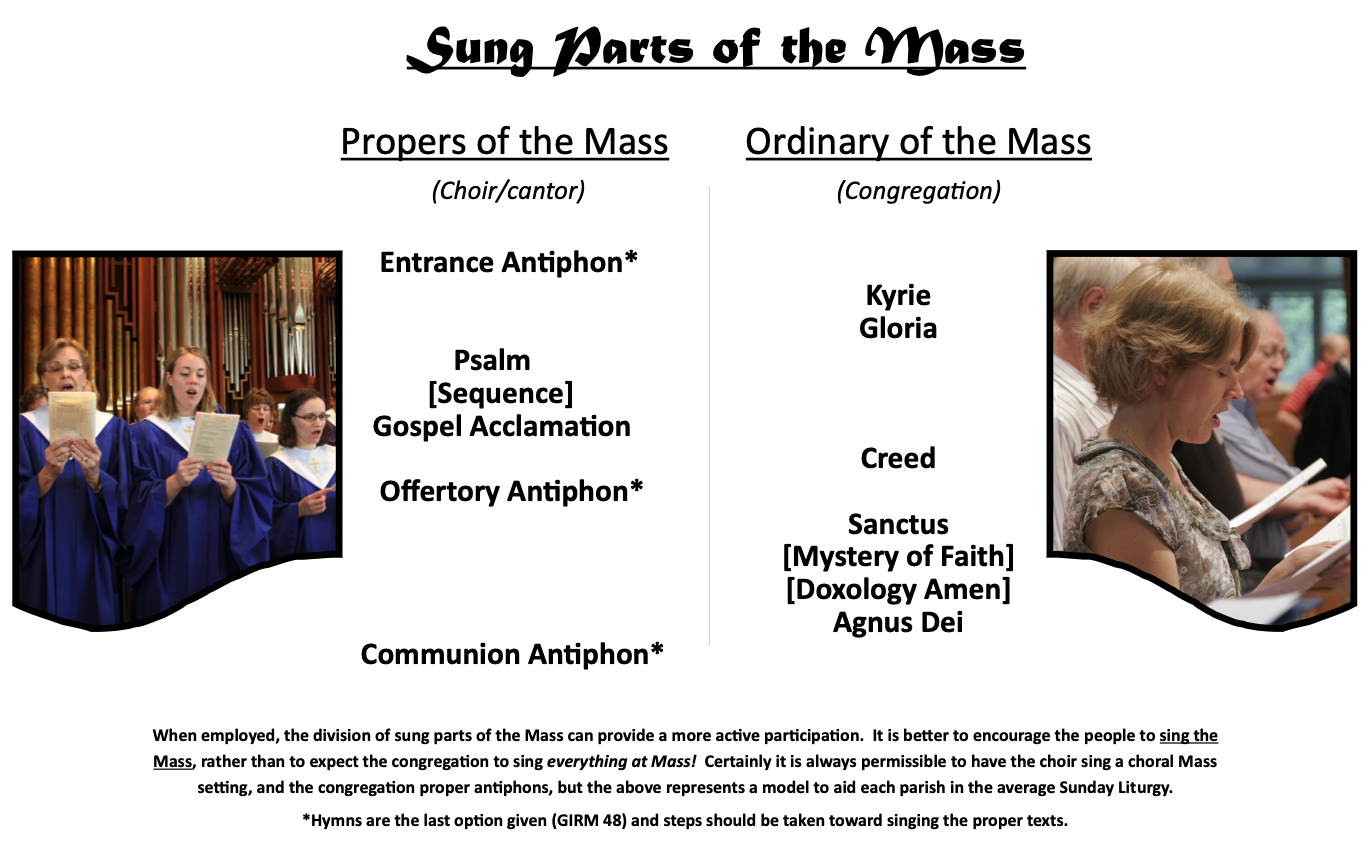
Please use this playlist to practice at home your sung parts of the Mass:
- Responses
- Kyrie
- Gloria
- Sanctus
- Agnus Dei
- Seasonal Marian Chant - Ave Regina Caelorum
We are currently learning the Gregorian Mass IX Missa cum jubilo as a way of expanding our repertoire as a parish. You did so well learning Mass VIII over the past three years, we are confident you can learn Mass IX as well little by little. At first, listening is one of the best ways to learn before eventually joining in. Keep up the good work!
-
-
Marian Chant - Feb. 3 through Lent
-
Latin Pronunciation - English Trans.
-
-
-
Marian Chant - Advent through Feb. 2nd
-
Sing-back line-by-line
-
Latin pronunciation - English trans.
-
-
-
Why Latin?
- Tradition: Latin has been the traditional language of the Catholic Church's liturgy for centuries, dating back to the early days of the Church. It provides a sense of continuity with the Church's rich history and heritage.
- Universal Language: Latin was once the common language of scholarship and communication in the Western world, making it a unifying language for the Church's global congregation. Using Latin ensures that the Mass can be understood by Catholics worldwide, regardless of their native language.
- Liturgical Stability: The use of Latin helps maintain liturgical stability and consistency across different regions and cultures. This allows for a uniform and standardized liturgical experience, reinforcing the Church's unity.
- Timelessness: Latin is considered a timeless and sacred language, creating a sense of reverence and solemnity during the Mass. It adds an element of transcendence, emphasizing the divine nature of the liturgy.
- Preservation of Tradition: By retaining Latin in some parts of the Mass, the Church preserves important traditions and rituals that have been passed down through generations. This continuity helps connect modern worshippers with the ancient roots of their faith.
- Musical Heritage: Latin is often used in sacred music, including Gregorian chant and polyphonic compositions. This musical heritage enhances the beauty and spiritual depth of the Mass, contributing to a more profound worship experience.
While Latin remains a part of the Catholic Mass, the Second Vatican Council (1962-1965) did introduce some reforms that allowed for the use of the vernacular (the local language) in certain parts of the Mass, making it more accessible to the congregation. This shift struck a balance between preserving tradition and making the liturgy more understandable to contemporary worshippers.
-
-
 "The renewal and the reform of the sacred liturgy is absolutely key and essential to the work of the new evangelization."-Most Rev. Archbishop Alexander King Sample, Archbishop of Portland